DUNE
Future / In Construction Energy range: 1–10 GeV (broad-band beam)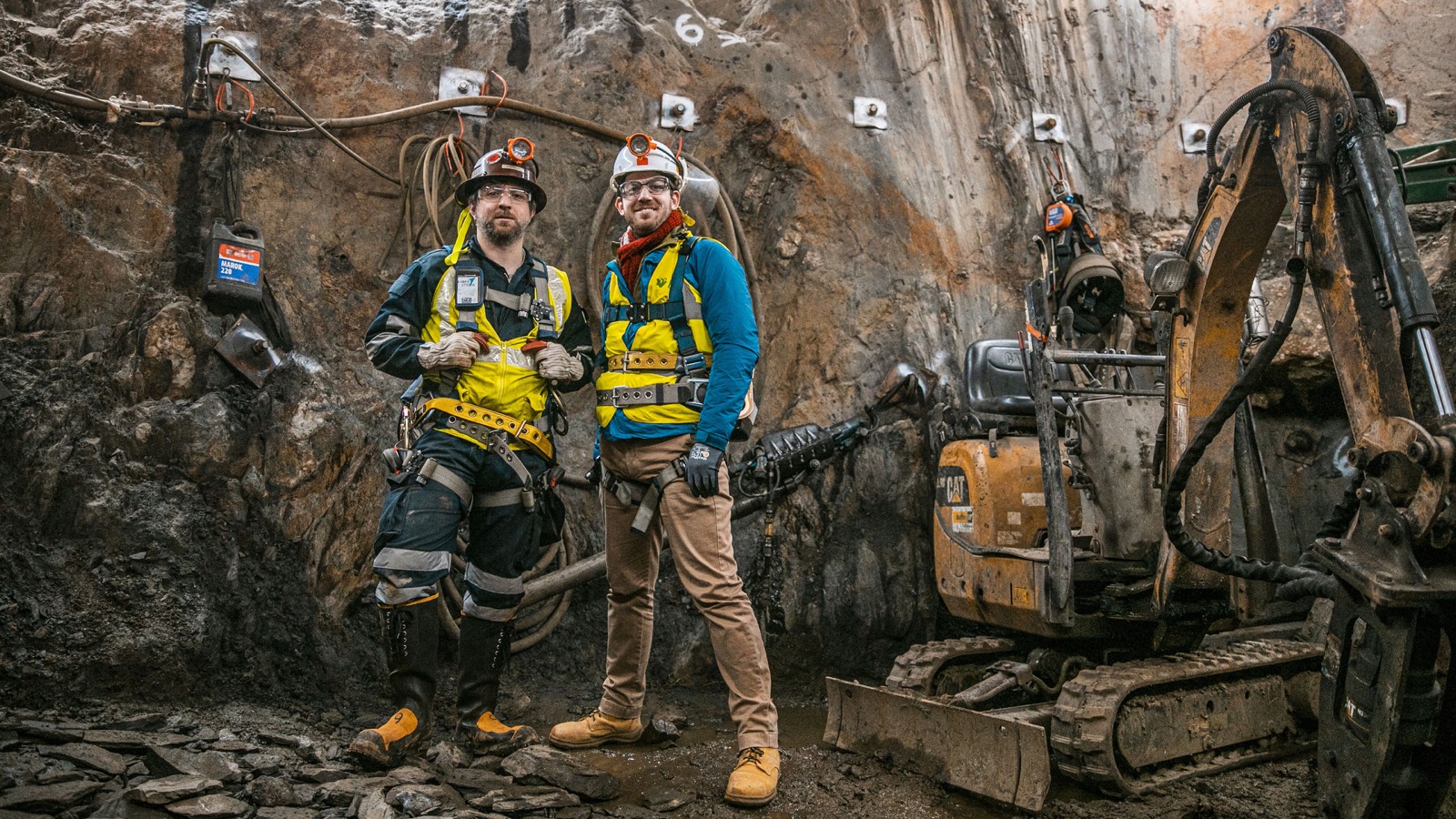
DUNE (Deep Underground Neutrino Experiment) is the flagship next-generation long-baseline neutrino oscillation experiment, currently under construction at two sites in the United States. A high-intensity wide-band neutrino beam will be produced at Fermilab in Batavia, Illinois and directed 1300 km to the DUNE far detector complex at the Sanford Underground Research Facility (SURF) in Lead, South Dakota, located 1.5 km underground in a former gold mine.
The DUNE far detector will consist of four liquid argon time projection chamber (LArTPC) modules, each containing approximately 17,000 tonnes of liquid argon (10,000 tonnes fiducial mass per module), for a total fiducial mass of ~40,000 tonnes — an order of magnitude larger than any previous LArTPC. Two detector technologies are being developed: a single-phase horizontal-drift design (HD) and a dual-phase vertical-drift design (VD). The DUNE near detector complex at Fermilab will include a LArTPC (ND-LAr), a high-pressure gaseous argon TPC (ND-GAr), and the SAND on-axis beam monitor.
DUNE’s broad physics program includes precision measurements of the CP violation phase δCP and the neutrino mass ordering over a wide range of L/E; detection of supernova burst neutrinos and the diffuse supernova neutrino background; searches for proton decay via p → K⁺ν̄; and a wide variety of beyond-the-Standard-Model searches. The 1300 km baseline and broad-band beam provide sensitivity to both the first and second oscillation maxima simultaneously.
Construction of the conventional facilities at SURF (the excavation of three large underground caverns) began in 2021. Prototype detectors (ProtoDUNE-SP and ProtoDUNE-DP) were operated at CERN to validate the technology and demonstrate detector performance at the multi-hundred-tonne scale.
DUNE's open data policy is under active development. The collaboration is working toward FAIR data principles and evaluating how to release data at multiple tiers. Limited prototype data (ProtoDUNE-SP raw waveforms) have been released previously. Watch this space.